2017年10月6日星期五

facebook faces stiff competition on multiple fronts


 Facebook launched Workplace last October with the aim of bringing its immensely popular social network to the world of business. The service combines the look and feel of Facebook's consumer app with features targeted toward enterprise users.

Its main advantage lies in its instant familiarity among end users. With 240 million Facebook users in the U.S. alone, chances are employees will already know their way around the application. From a business perspective this has a number of benefits. It means that there is less time spent training staff to use a new tool, and, in theory at least, increases the likelihood of strong uptake across an organization.


Of course, breaking into the fast-changing and increasingly crowded collaboration market brings its own difficulties. The social network has led the way in connecting families and friends, but convincing large organizations that it is ready to do the same job for staff is a much bigger challenge. And with Workplace, Facebook has come up against both established enterprise software firms such as Microsoft, Cisco and Google as well as a range of new chat platforms focused on team-based collaboration, such as Slack.

So how has Workplace fared in winning over corporate customers 12 months after its official launch?


According to 451 Research senior analyst Raúl Castañón-Martínez, despite some challenges in moving into the enterprise market, Workplace has achieved "remarkable growth" in the relatively short time it has been available.

The application is currently used by more than 14,000 organizations globally, according to Facebook, up from 1,000 at the end of its private beta. Royal Bank of Scotland was one of the big corporate users announced before the service's full launch — back when Workplace was named Facebook at Work — with the multi-national bank rolling out the software for its 100,000-strong workforce in late 2015. Last week, Facebook announced Walmart as its latest customer win, a significant deal with a retail giant that employs 2.2 million staff globally.

And with interest in collaboration software booming, there is plenty more room for growth. "It might seem like Workplace was a bit late to launch, but the party is just getting started," said Castañón-Martínez. "Slack has experienced phenomenal growth and has not been around for that long. If you look at the total addressable market, they've just begun scratching the surface. This means the market is still growing and is up for grabs."

[ To comment on this story, visit Computerworld's Facebook page. ]
How does Workplace work?

Workplace has a similar look and feel to its consumer-focused equivalent — including the familiar central News Feed — making it easy for new users to pick up. Its instant messaging tool, Work Chat, allows colleagues to chat or set up 1:1 video calls. Groups can be created to focus on specific projects, while a multi-company feature enables staff to communicate with external teams. Live video streaming allows organizations to engage with a large number of employees at once.

And the differences between Facebook's consumer application and the enterprise version go deeper than swapping the familiar blue interface for a businesslike gray. There are additional features targeted towards IT admins, including an analytics dashboard, single sign-on capabilities and two-factor authentication.

Workplace faces competition from a variety of companies, such as the enterprise social networks that Facebook to some degree inspired, including Jive, Microsoft's Yammer and IBM Connections. Its functionality also overlaps that of team collaboration tools such as Slack, Microsoft Teams and Atlassian Stride, though there are differences in focus.

"Slack is more closely associated with traditional team collaboration, where people constantly work with each other, communicate often and need to coordinate their efforts. Social networks can certainly fill that role, but they have a stronger affinity to broader, less formal conversations," said Gartner research director Larry Cannell. "Workplace's focus on groups has tried to bring it closer to team collaboration, but their heritage as a social network still influences assumptions people make about them."

Workplace pricing

Facebook offers two tiers for its product, Workplace Premium and a free Standard tier unveiled earlier this year. The free tier provides limited functionality and support but includes the full range of communication features, such as live video streaming, voice and video calls and group chat. 

The premium tier adds various enterprise-level features and costs $3 per user for the first 1,000 active users, $2 per user for the next 9,000 active users and $1 per user thereafter. It is free for nonprofit organizations and staffers at educational institutes.

Castañón-Martínez said that Facebook has targeted large-scale "volume adoption" across enterprises with Workplace. "The same can be said of other competitors, but Facebook is particularly aggressive about this approach," he said, adding that Facebook's pricing reflects this. "It is similar to Atlassian's — and to a certain extent, Slack's, whose products have been successful with viral adoption and are known for low price/high volume pricing strategy."

With the introduction of its free tier, Facebook has arguably courted smaller businesses as well. "For some small companies, Workplace could effectively become their social network, intranet and group messaging system," said Cannell.

Gaining a foothold in the enterprise

Facebook's name recognition has helped it attract some big-name customers to Workplace early on. However, it does not have the legacy of deep enterprise relationships that some rivals do, and building credibility with a corporate customer base is not straightforward.

"Workplace by Facebook has nailed usability but not enterprise trust," said Craig Le Clair, vice president and principal analyst at Forrester. Several companies that conducted pilot deployments of Workplace subsequently ended them "due to inflexible terms and conditions that indicate a lack of maturity in enterprise agreements," he said. 

"Others do not trust Facebook with internal proprietary communication," Le Clair added. "Still others have not overcome Facebook's association with fun rather than work."

One way Facebook has improved Workplace's appeal as a business application is with the addition of integrations with third-party software tools, available at the premium pricing tier. While these were thin on the ground at launch, in April of this year Facebook announced a series of integrations with the likes of Salesforce, Dropbox and Microsoft Office, making it easier to share information and collaborate within Workplace.

It also recently announced an integration with videoconferencing firm BlueJeans. "This brings Workplace closer to the unified communications and audio/video conferencing players," said Castañón-Martínez. "It also makes it a close competitor for Stride, Atlassian's new business communications product."

That said, Workplace still lags Slack in the number and variety of integrations it supports. "Workplace could probably expand their value proposition with further integration to third-party applications, which is something Slack has been particularly good at," Castañón-Martínez said.

While Facebook is attempting to become more enterprise-friendly, Castañón-Martínez said, its main strength remains in its position as the owner of the world's largest social network, as well as social messaging apps such as Messenger and WhatsApp.

"The popularity [of these consumer apps] will not automatically translate into user adoption for Workplace, but it is undeniable that the company has acquired extensive experience in the messaging space," he said. "It is precisely the ease of use and viral adoption of these apps that enterprise messaging applications have tried to emulate from the beginning."


cheap oem software 

lean tips about mobile device repair

As mobile devices become a primary computing platform for many enterprise employees, repairing or replacing smartphones and tablets at the local Apple or Microsoft store isn't a viable option for large enterprises.

While managed mobility services (MMS) have been around as long as mobile devices, until recently such services tailored to repairing and replacing mobile devices were immature. The consumerization of IT and the growth of bring-your-own-device (BYOD) policies as well as corporate-issued smartphones and tablets had left them unable to scale at an enterprise level.


At the same time, the myriad of mobile devices and mobile operating systems has made it difficult for IT shops to address issues associated with them. For example, Android fragmentation — both hardware and software — has led organizations to farm out device management in order to free up corporate IT resources for business projects.


Having internal IT shops support smartphones and tablets doesn't make sense for most enterprises — very large or very small, said Eric Goodness, a vice president of research in Gartner's Technology and Service Providers unit. Forward and reverse logistics — or the purchasing of new devices and the reuse of existing ones — are critical to enterprises, but it's simply too expensive to address these functions internally for a mobile workforce, Goodness said.

"It is so much easier and less expensive to push the sourcing-to-disposition life cycle to a third party," he said, citing "Genius Bar"-style services on enterprise campuses as a growth area for MMS providers.

repair and replace broken mobile devices managed mobility solutions Thinkstock
Jonathan Nikols, global head of HP's Device-as-a-Service, said he has seen an explosion of mobile devices among enterprise customers. "There are estimates that by 2020, there will be four devices for every employee," Nikols said.

[ To comment on this story, visit Computerworld's Facebook page. ]
"The question becomes how do you secure them all? They're multi-vendor in nature," he continued. "Apple and Android rule the smartphone market, but then there are multiple variations of Android hardware... and multiple OSes. How do you address all that with finite resources?"

For example, while one service provider may repair and replace hardware, it may not address software provisioning on new smartphones or tablets, or cover the onboarding of new employees. The employee may still need to go to IT to ensure all critical business applications and security protocols are applied to a device.

"Companies may look to an EMM [enterprise mobility management] integrator to secure devices, but that's not necessarily the same company you'd look to for repair and replace strategies," said Chris Marsh, a research director at 451 Research.

"The issue with mobility that we still have, even a decade after the first iPhone... is that software and hardware are still not integrated," Marsh said. "And, of course, business apps for use on those devices likely came from a whole different set of providers. There are just too many pain points."

[ Further reading: How to choose the right enterprise mobility management tool ]
Managed mobility services vendors have matured

In 2013, Gartner described the MMS marketplace as having no leaders or challengers, stating that "providers need to invest more in people, processes, tools and awareness to better serve a growing global demand."

Over the past few years, however, the MMS market has matured and scaled to the point where some providers offer both hardware and software services.

MMS providers can now address pools of globally distributed, corporate-liable and BYOD users, according to Gartner. Along with replacing or repairing hardware, services include acquiring mobile devices for employees, provisioning them with job-specific business applications, and ensuring that security protocols are in place.

In 2016, Gartner evaluated 14 vendors for its Managed Mobility Services Magic Quadrant. IBM and smaller, pure-play MMS vendor Digital Management Inc. (DMI) led the pack in their ability to execute on six deliverables, three of which specifically addressed repair and replace capabilities for smartphones, tablets and field service equipment with a focus on corporate-liable devices as well as BYOD users:

Sourcing and logistics management — the systems and services used to purchase, provision and activate mobile network services and mobile devices
Mobile service management — the systems and services to inventory and audit mobile network contracts and mobile devices; may also audit and log users' mobile network service usage and related performance and availability
Program and financial management — the ability to act as an agent on behalf of an enterprise with third-party providers, such as mobile network operators, independent software vendors, device manufacturers and device resellers, to conduct ongoing and project-based services on behalf of the user
In its short list of small vendors to consider, Gartner recommended VoxMobile and Mobi, along with DMI. In its list of large vendors, Honeywell, Vodafone, and HPE were included with IBM.

Managed Mobility Services Magic Quadrant Gartner
Gartner
Gartner's 2016 Managed Mobility Services Magic Quadrant.
MMS providers typically price their services as a monthly recurring charge per device, per user. Some providers also bundle project-based services (such as consulting), which generally are nonrecurring charges, into the monthly recurring charge.

"It is quite typical for MMS proposals to come in the form of a bill of materials, where each discrete service charge (for example, help desk, kitting, and sourcing and software release management) is presented as an individual charge," the Gartner report stated. "This is also the preferred model, as it offers cost transparency."

Businesses may still be challenged to find a single service provider that consistently delivers all the IT and business process services they may require at a global level. Enterprises may need multiple service providers or third-party program management where multiple services are integrated under one umbrella, according to Gartner's report.

How managed mobility services work

Some vendors offer MMS as part of general device-management programs. Last year, HP launched its Device-as-a-Service (DaaS) offering, which can provide and manage desktops, laptops, phones and tablets for its customers through partnerships with various hardware and software providers.

"In our DaaS program, a customer will select a device... and then we have a support plan that provides the break and fix maintenance attributes, the implementation and installation, accidental damage and recovery and media retention," Nikols said.

HP determines the contractual relationship enterprises want to have, whether it's with a value-added reseller, a global systems integrator or a direct relationship with HP, "and then we provide it back to you within a utility model or a per user, per device pricing model," he said.

For example, the cost of a contract would include an SLA on how fast the turnaround time on a device repair and replacement is — whether it's next day or four days.

When an end user's device breaks or is in need of replacement, they file a help-desk ticket just as they would with any IT shop, but the ticket is automatically routed to the HP DaaS service.

HP's DaaS service also handles employee onboarding an offboarding.

"If it's a new employee, they would go through their HR onboarding processes, and through our relationship, the requirement for that order would be triggered into our systems, and we'd work through our contractual obligations based on SLAs," Nikols said. "So, we'd have that ready for them at their desk day one as a business-ready device."

The device comes from HP with all the latest patches and firmware.

HP can also provide analytics to collect data on how mobile devices are being used. For example, the cloud analytics can detect how heavily a device's processor is being used, what applications have been downloaded to the device and which ones are used most often, and even the last time an application was opened.

"We then provide that information to customers in the form of different reports," Nikols said. "That helps with security monitoring. Did the employee disable the firewall, for example? Are they aware that certain apps are causing a device to crash?"

Tangoe, an MMS-specific provider, purchases hardware up front, which it warehouses in order to use as replacement units for its customers while it sends out mobile devices for repairs or permanent replacements. The company refers to its service as "technology lifecycle management," and it takes a "fleet approach" where it's both carrier- and OS-agnostic.

"You have to look at simplicity," said Craig Riegelhaupt, Tangoe's director of product marketing. "Can my end user activate this without having to go through a huge amount of internal approvals or handshakes? In other words, is there a procurement system embedded?"

As with HP, Tangoe has the ability to image a mobile device with all the business applications and permissions a corporation requires based on an employee's role.

It can provide service contracts for corporate-issued devices as well as a choose your own device (CYOD) policy, where the end user chooses the device they want but it is still under the scope of a corporate mobile device management strategy.

"It's basically the ability to provide a level of service based on the entire mix of equipment an employee has," said Kenneth Noel, director of operations at Tangoe.

As with some other MMS programs, Tangoe monitors the mobile device throughout its life cycle, so if it's lost or stolen, it can be tracked and reported back to the corporate IT department. And at the end of a device's life, when it's turned in, Tangoe can furnish certificates to show it's been wiped of all corporate apps and data.

Gartner's Goodness pointed to Sprint's Mobility-as-a-Service offering, launched in 2015, as having "nailed it" as a "straightforward proposition" in MMS. Through its MaaS program, Sprint owns the mobile device, the management systems and even the network (cellular) contracts, and the customer just pays a monthly recurring charge per device. There are no mobile network contracts to manage, so there's no service desk to resource and no software entitlement issues to manage, Goodness said.

"Capital expenses and headcount disappear in favor of an operating expense," Goodness said. "We are now seeing MaaS providers look to bundle in [Microsoft] or Google or other collaboration and productivity apps as part of the bundle. Frictionless mobility. That is the future."

Five steps for developing an MMS strategy

What should enterprises do when developing a repair and replace strategy? Marsh from 451 Research recommends these steps:

Do an inventory of devices. Make sure you know the devices deployed and what their status is. Are they company-issued devices, stipend-based BYODs or CYODs that are under the scope of your corporate mobile device strategy?
Segment users and devices. Know whether mobile devices are for field service jobs with critical business apps running or for general knowledge workers who may not need expedited repairs or replacements.
Evaluate the capabilities of potential service providers. Do they offer hardware, software or both? Fundamentally, you'd like both. Check to ensure that providers offer SLAs that include not only turnaround times on hardware repairs and replacements but also software provisioning.
Educate the workforce on what their expectations should be. Should they expect next-day turnaround, or will you be providing a loaner device while theirs is being repaired or replaced? Standardize rules around how that works for your employees.
Ensure that the service pricing model is right for your company. Look for flexible pricing models. Some companies may want to consider a finance arrangement where they don't buy a device outright but pay it off over its life cycle to avoid heavy up-front costs. Others may want to consider the total cost of ownership and whether it's more advantageous to allow the service provider to own the hardware.

Open source and Linux become new security headache

Windows has long been the world's biggest malware draw, exploited for decades by attackers. It continues today: The Carbon Black security firm analyzed 1,000 ransomware samples over the last six months and found that nearly 99% of them targeted Windows.


That's not news for IT administrators, of course. But this might be: Linux and other open-source software are emerging as serious malware targets. Several recent highly publicized attacks exploit holes in open-source software that many enterprise admins once considered solidly safe.


Let's start with the big one: the recently disclosed Equifax break-in that resulted in the private information of 143 million people being stolen, including Social Security numbers, birth dates, addresses and more. Typically, when you find the cause of a breach like this, it involves Windows. That's not the case with the Equifax hack, though.

A web application vulnerability in the widely used open-source Apache Struts web development framework allowed attackers to break into Equifax and do their damage. The framework is used by many enterprises in education, government, financial services, retail and media. Even though the vulnerability was first discovered and patched back in early March, Equifax didn't install the patch until after it found it had been hacked.

Sound familiar? It should. That's typically how Windows attacks proceed — enterprises don't get around to patching Windows to close security holes, and hackers take it from there. A recent study by Adaptiva, which offers security and management solutions for network endpoints, found that 49% of all enterprises surveyed said that their biggest security challenge was keeping Windows and Windows applications updated. And 59% said it takes a month or more to update Windows throughout their enterprise.

It appears as if Linux and open source are becoming a similar security headache for companies. Ian Folau, CEO of GitLinks, which specializes in security for open-source software, warns in an InfoWorld blog that at least half of all Fortune 100 companies use Struts. He adds, "Less than 10 percent of companies are monitoring open source in their company, so even if these companies wanted to update their versions of Struts, they would have a hard time figuring out which applications were using Struts." He believes that many other attacks will be launched using the Struts vulnerability because it will remain largely unpatched.

The Equifax attack isn't the only big one involving open source or Linux to have emerged recently. The "BlueBorne" attack vector exploits vulnerabilities in Bluetooth implementations. It can be used to take over a device and use it to spread malware or ransomware and become part of a botnet. At risk are almost 5.3 billion devices worldwide that use Windows, iOS, Android and Linux-based operating systems.  Among the Linux devices that are at risk are Samsung's Gear S3 smartwatch, a number of Samsung televisions, some models of drones and many Tizen devices, as well as some Linux desktop PCs and servers.

[ Further reading: Ransomware became one of the top threats to enterprises in 2016 ]
Some industry watchers predict even more attacks targeting open source and Linux in the enterprise.  A Carbon Black blog post, "7 Predictions for Ransomware's Evolution," warns, "We believe ransomware will increasingly target Linux systems in an effort to further extort larger enterprises. For example, attackers will increasingly look to conduct SQL injections to infect servers and charge a higher ransom price. We have already observed attacks hitting MongoDB earlier this year, which provide an excellent foreshadowing."

The attacks Carbon Black mentioned happened this past January, when open-source MongoDB databases around the world were hacked and data was taken from them and held for ransom.

All this isn't to say that Linux represents a greater threat to enterprises than does Windows. Windows is dominant in the enterprise, and as long as that's the case, it will remain the primary target. But attackers have a way of going after low-hanging fruit, and IT admins aren't as used to open-source software being under attack as they are Windows. So expect more, larger attacks on open source and Linux in the enterprise as IT admins try to figure out how to protect them as well as Windows.

2017年9月23日星期六

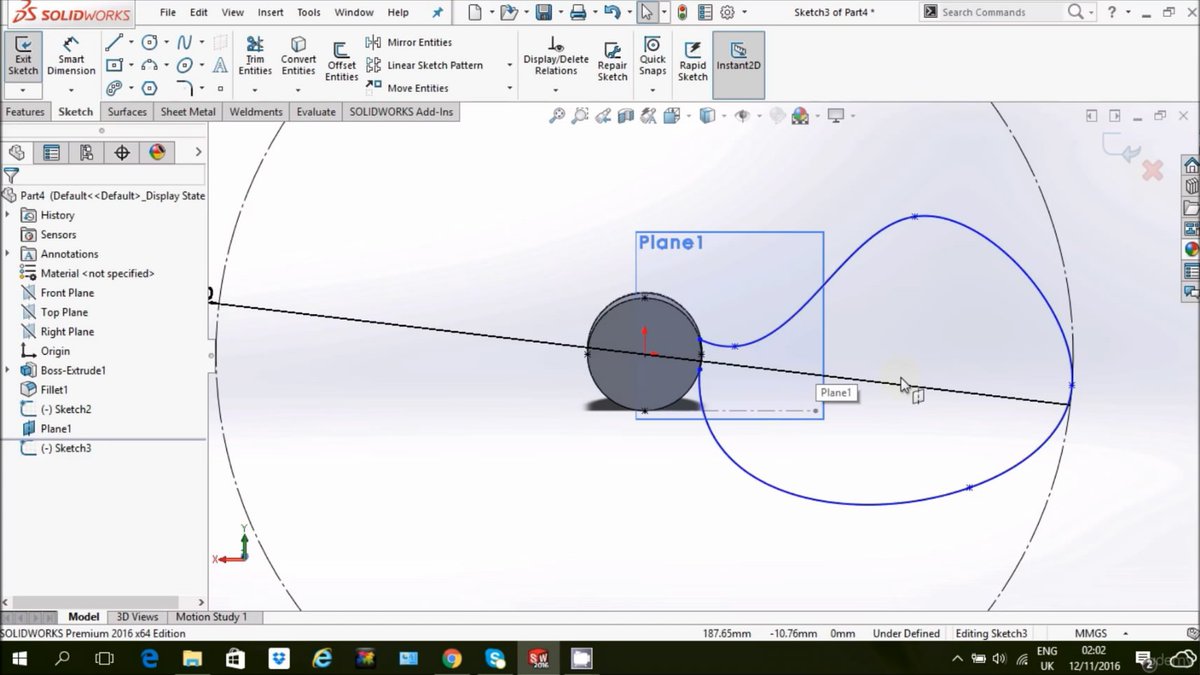
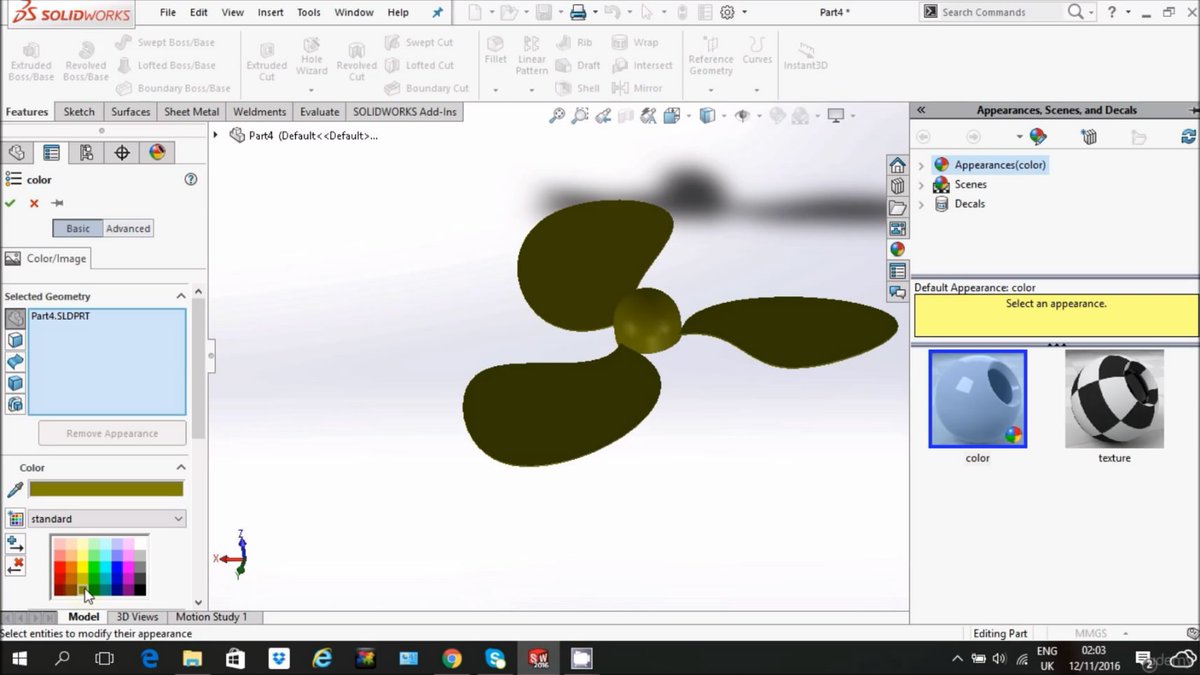
how use solidworks create Propeller | video lesson practice exercises

http://www.ikeye100.com/solidworkstutorilas/81/

Today in this Basic Tutorial of SolidWorks we will create a Propeller to demonstrate the utilization of part modeling feature .

buy solidworks   cheap solidworks

SOLIDWORKS 2017 Premium is powerful solid modeling computer-aided design (CAD) and computer-aided engineering (CAE) program especially for creating 2D or 3D models. It has all the latest designing tools and features that help the designers in designing single components, incredibly complex equipment, or even entire facilities and turn ideas into higher quality products. There are new powerful modeling tools are there in this version. These helps the designers to design faster, easier modeling with fewer picks and clicks. 

You can buy solidworks program at low price and other solidworks tutorials.Everything you need to learn what's new, including tech tips, demos, and upcoming product webinars.

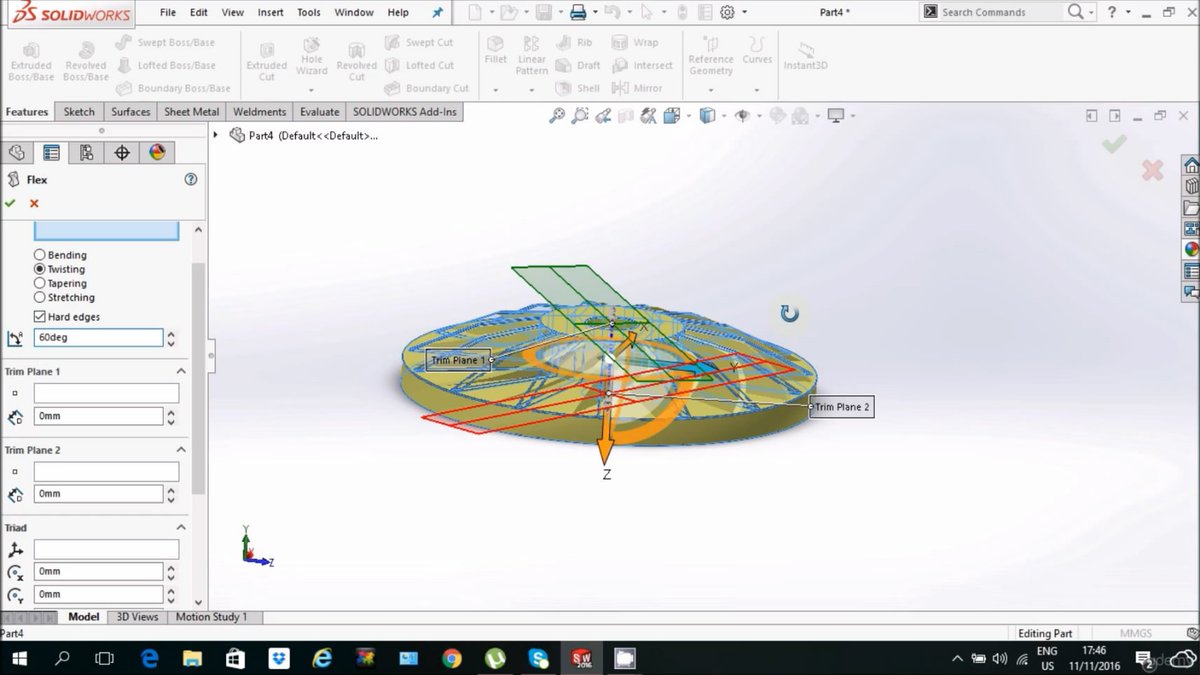
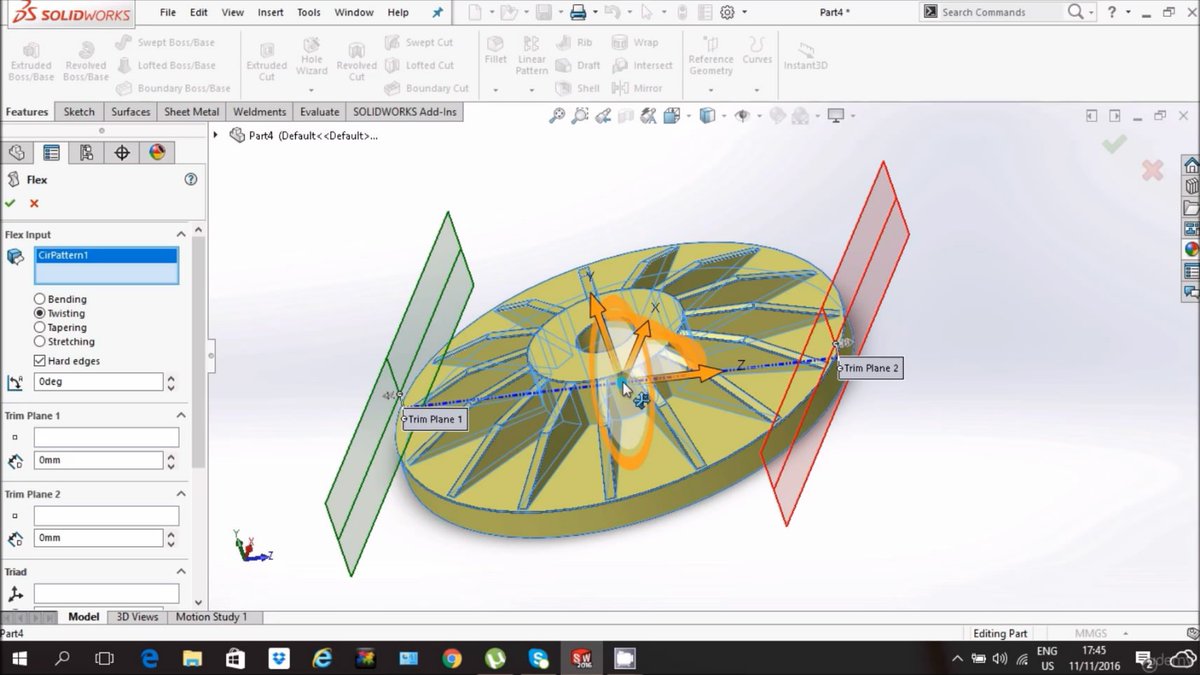
learn solidworks feature flex by video practice exercise Model a professional fins

http://www.ikeye100.com/solidworkstutorilas/80/

In this video we are going to elaborate Flex feature capabilities of SolidWorks.

Flex features deform complex models in an intuitive manner.You can create four types of flexes:Bending,Twisting,Tapering,Stretching.

The flex feature calculates the extents of the part using a bounding box. The trim planes are then initially located at the extents of the bodies, perpendicular to the blue Z-axis of the triad .The flex feature affects the region between the trim planes only.The center of the flex feature occurs around the center of the triad location.To manipulate the extent and location of the flex feature, re-position the triad and trim planes. To reset all PropertyManager values to the state they were in upon opening the flex feature, right-click in the graphics area and select Reset flex.

buy solidworks    cheap solidworks

SOLIDWORKS 2017 Premium is powerful solid modeling computer-aided design (CAD) and computer-aided engineering (CAE) program especially for creating 2D or 3D models. It has all the latest designing tools and features that help the designers in designing single components, incredibly complex equipment, or even entire facilities and turn ideas into higher quality products. There are new powerful modeling tools are there in this version. These helps the designers to design faster, easier modeling with fewer picks and clicks. 

You can buy solidworks program at low price and other solidworks tutorials.Everything you need to learn what's new, including tech tips, demos, and upcoming product webinars.

solidworks using surfaces tool,circle and extrude boss/base feature create Hand Bracelet | video lesson practice exercises

http://www.ikeye100.com/solidworkstutorilas/82/

This video covers the SolidWorks lots of  feature. i will create a Hand Bracelet.

The details of how to use this urfaces tool ,circle and extrude boss/base feature 

buy solidworks    cheap solidworks

SOLIDWORKS 2017 Premium is powerful solid modeling computer-aided design (CAD) and computer-aided engineering (CAE) program especially for creating 2D or 3D models. It has all the latest designing tools and features that help the designers in designing single components, incredibly complex equipment, or even entire facilities and turn ideas into higher quality products. There are new powerful modeling tools are there in this version. These helps the designers to design faster, easier modeling with fewer picks and clicks. 

You can buy solidworks program at low price and other solidworks tutorials.Everything you need to learn what's new, including tech tips, demos, and upcoming product webinars.

how to make a Necklace in solidworks | video tutorial practice exercises

http://www.ikeye100.com/solidworkstutorilas/83/

in this tutorial video i will show you how to sketch chain in solidworks.

buy solidworks   cheap solidworks

SOLIDWORKS 2017 Premium is powerful solid modeling computer-aided design (CAD) and computer-aided engineering (CAE) program especially for creating 2D or 3D models. It has all the latest designing tools and features that help the designers in designing single components, incredibly complex equipment, or even entire facilities and turn ideas into higher quality products. There are new powerful modeling tools are there in this version. These helps the designers to design faster, easier modeling with fewer picks and clicks. 

You can buy solidworks program at low price and other solidworks tutorials.Everything you need to learn what's new, including tech tips, demos, and upcoming product webinars.